Why 72 hours?
In March 2025 the European Commission presented its Preparedness Union Strategy. One of its aims is to encourage people to keep essential supplies for at least 72 hours in an emergency. Those are the first hours, when emergency services are most stretched and help is hardest to get.
Catalonia’s Civil Protection takes the same approach: it recommends a kit that lets a household be self-sufficient for at least three days, without basic utilities or outside help.
Two different things: the home reserve and the grab bag
People often say “emergency kit” to mean two different things, and it helps to keep them apart:
- The home reserve: what you need if you have to stay at home for several days (a long power cut, a water outage, a storm).
- The grab bag: what you would take with you if you had to leave home quickly.
The home reserve: what Civil Protection recommends
- Water: 1.5 litres per person per day.
- Food that keeps and needs no cooking.
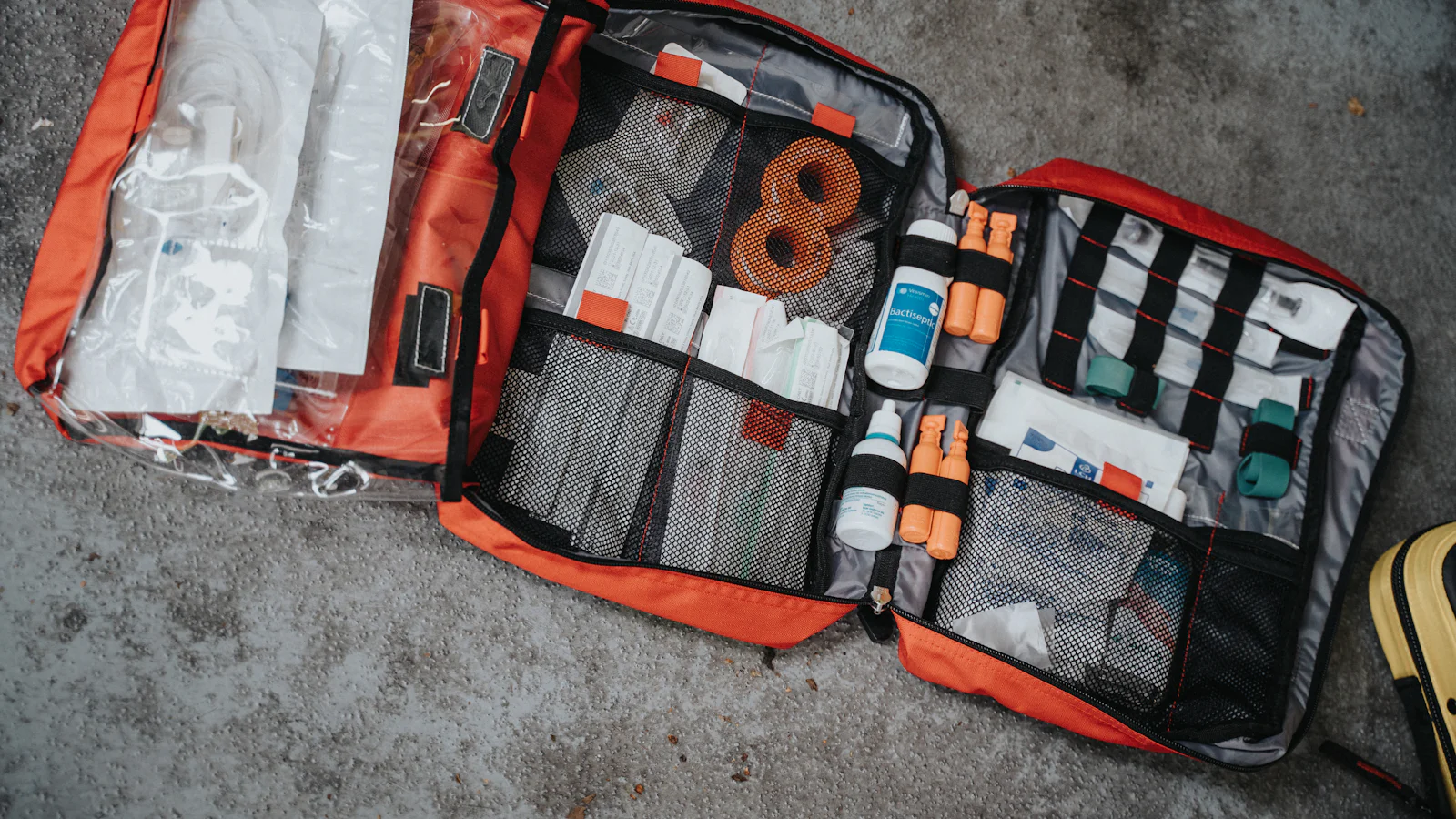
- Regular medication and a basic first-aid kit.
- A torch with spare batteries.
- A battery or wind-up radio.
- Important documents and cash, in a waterproof bag.
The grab bag
Civil Protection recommends keeping a bag ready near the door with what you would need for the first hours away from home:
- Documents in a waterproof bag
- Torch, radio and spare batteries
- Mobile phone and charger
- House and car keys
- First-aid kit and regular medication for three days
- A paper list of important phone numbers
- Cash and a bank card
- Water and easy-to-open food
- A change of clothes and toiletries
Adapting it to your family
Every household is different, and Civil Protection recommends adding whatever people with specific needs require:
- Young children: nappies, formula or baby food, and a game or toy to make the wait easier.
- Older people: medication, spare glasses, hearing-aid batteries and an ID tag if they may become disoriented.
- Pets: food, water, their medication and a lead or carrier.
- People with an electrical medical device: spare batteries and a plan agreed with their medical team.
The family plan: the part you can’t buy
A kit is not much use if the family doesn’t know what to do. Civil Protection recommends a simple plan that everyone knows, children included:
- One or two meeting points: one near home and another outside the neighbourhood.
- Two contact people, one of them in another town.
- Knowing that 112 is the emergency number across Europe, and using it only for emergencies.
- Knowing where the water, gas and electricity shut-offs are.
- Knowing where the kit is and what is inside.
The most forgotten part: keeping it up to date
A kit that is put together once and never checked ends up with expired food and flat batteries. An easy trick is to check it twice a year, when the clocks change: look at the expiry dates, test the torch and radio, and charge the power bank.